

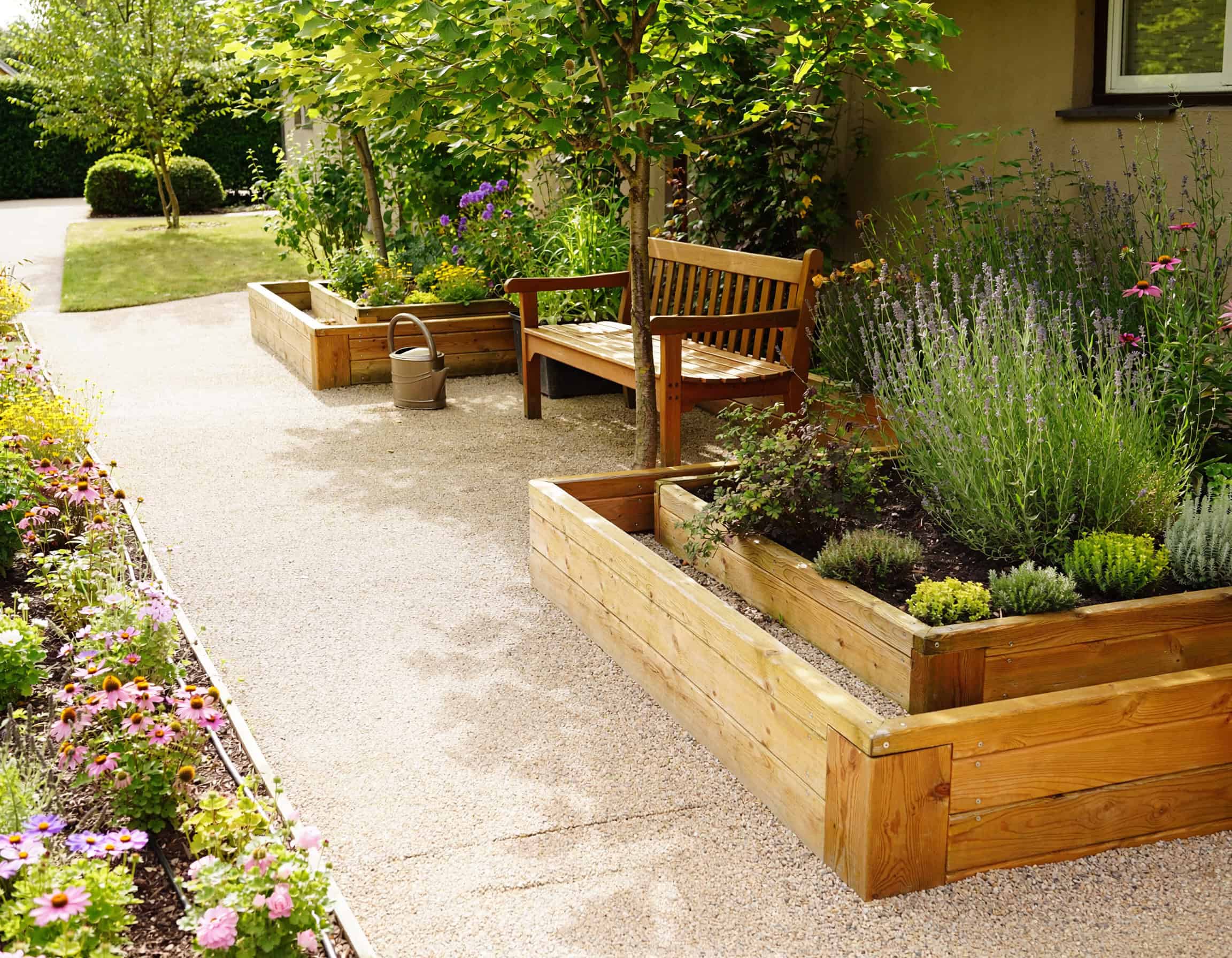

For a care home, the garden is not a nice-to-have – it is part of the care. Research consistently shows that access to safe, attractive outdoor space improves residents’ mood, sleep, appetite and overall wellbeing. For families choosing a home, the grounds are also one of the very first things they judge. A neglected, overgrown garden quietly tells a worried relative that corners are being cut elsewhere too.
All Seasons Garden Maintenance provides care home grounds maintenance across Epsom and Surrey as part of our wider communal and commercial grounds service. This guide explains what makes care home grounds different, and how the right maintenance partner helps you create outdoor spaces that residents genuinely use and enjoy.
Safety and Accessibility Come First
In a care setting, every element of the garden has to be assessed for safety. Paths must be even, well-defined and free of the moss and algae that cause slips – which is why regular jet washing of hard surfaces is a core part of any care home contract, not an optional extra. Sightlines need to stay open so staff can supervise easily, and trip hazards from overgrown edges or self-seeded growth must be managed proactively.
- Level, slip-free paths – routine cleaning and edge management to keep walking routes safe for frames and wheelchairs
- Open sightlines – hedges and shrubs kept low and clear so staff can supervise residents easily
- Secure boundaries – boundary hedges maintained to keep gardens enclosed and reassuring
- Shade and shelter – managing trees and planting so there is comfortable, safe shade in summer
The reason safety has to be designed into the maintenance regime, rather than treated as an occasional tidy-up, is that risk in a care garden accumulates quietly. A path that is perfectly safe in March can be treacherous by October once leaf fall, damp and algae build up.
A border that looked neat in spring can, by midsummer, have spilled over a walking route or hidden a step. Residents with limited mobility, poor eyesight or unsteady balance have very little margin for these small hazards, and a single fall can mean a hospital admission and a lasting loss of confidence. Proactive, scheduled care is what keeps the garden consistently safe rather than safe only on the day after a visit.
It also matters who notices a problem first. A good grounds maintenance team becomes a second pair of eyes on the outdoor environment – flagging a loosening paving slab, a low branch over a bench, or a gate that no longer closes properly, before it becomes an incident the home has to report. That informal vigilance is one of the most valuable and least discussed parts of a well-run care home contract.
Designing and Maintaining Dementia-Friendly Gardens
Gardens designed with dementia in mind follow a few well-established principles, and good maintenance is what keeps those principles working over time. Looping paths that always lead back to a recognisable point prevent the distress of dead ends. Strongly scented and brightly coloured planting provides gentle sensory stimulation and orientation cues. Familiar, non-toxic plants reduce risk and evoke positive memories.
Our teams maintain these features as they were intended: keeping paths clear and continuous, deadheading and pruning sensory planting to keep it vivid, and removing any plants that have self-seeded where they should not be. For homes wanting to refresh tired borders, we can source and supply suitable planting and install it as a one-off project.
The choice and upkeep of planting deserves particular thought in a dementia setting. Highly scented herbs such as lavender, rosemary and mint can prompt memory and conversation, while plants with soft, tactile foliage invite residents to reach out and touch them safely. Just as important is what to leave out: anything thorny, irritant or toxic if eaten needs to be identified and managed, because residents living with dementia may not recognise a plant as something not to handle or taste.
We keep a working knowledge of which species are appropriate, prune to keep sharp or vigorous plants in check, and raise anything of concern with the home rather than removing it unilaterally. Sensory impact also fades without upkeep – borders that are not deadheaded and fed stop flowering, scents weaken, and the colour that helped with orientation disappears. Maintaining that vividness across the seasons is an active job, not a one-off planting decision.
Why DBS-Checked, Reliable Teams Matter in a Care Setting
Care homes are regulated environments with vulnerable residents. Just as with schools, contractors should be DBS-checked, should sign in and out, and should understand how to work respectfully and quietly around residents who may find unfamiliar people or sudden noise distressing. Our DBS-checked grounds maintenance teams are briefed to work calmly, keep machinery use considerate, and treat the home and its residents with the dignity they deserve.
In practice this shapes how a visit is run. Loud equipment such as mowers and blowers can be timed away from rest periods, mealtimes and activity sessions where possible, and teams are mindful that a resident watching from a window is part of their audience.
Operatives who turn up in identifiable uniform, follow the home’s sign-in and safeguarding procedures, and are the same familiar faces week after week are far less unsettling than a rotating crew of strangers. For a manager, that consistency also means less time spent briefing and supervising, and confidence that the people on site understand the setting they are working in.
Working Alongside the Home and Its Families
The best care home grounds maintenance is a partnership rather than a service delivered at arm’s length. Activity coordinators may want certain areas kept accessible for gardening sessions with residents; staff will know which spots residents favour and which routes they walk most; and families sometimes wish to plant something in memory of a relative.
A maintenance team that communicates well – confirming what was done at each visit, flagging anything that needs a decision, and being reachable between visits – makes the home’s job easier and the garden genuinely usable. We work to a clear point of contact and keep the home informed, so there are no surprises and the grounds reflect how residents and staff actually use them.
Year-Round, Seasonal Care
A care garden has to work in every season, not just look good in June. Autumn brings the heaviest safety workload, as fallen leaves turn paths slippery and block drainage; these need clearing promptly rather than left to accumulate.
Winter is about keeping access safe and boundaries secure when the garden is used less but still viewed daily from inside, and about planning the structural pruning that is best done while plants are dormant. Spring is the moment to refresh borders, feed lawns and bring sensory planting back to life, while summer demands regular mowing, watering support for newer planting, and shade management so residents can sit out comfortably.
A fixed seasonal schedule means each of these jobs happens at the right time, and nothing important is forgotten in the months when the garden is out of mind.
The Value of a Fixed, Predictable Contract
Care home budgets are tight and scrutinised. A fixed-schedule grounds maintenance contract gives you a predictable monthly cost, a written specification of exactly what is delivered, and no surprise bills for reactive work – because regular care prevents most problems from escalating.
It also gives inspectors and visiting families visible, consistent evidence that the environment is being properly looked after year-round.
Call All Seasons Garden Maintenance on 01372 610566 or request a free site assessment today.

