
Surrey’s climate – mild and often damp winters followed by increasingly warm and humid summers – creates ideal conditions for a range of common plant diseases and pest problems that can cause serious damage if left unaddressed.
If you have noticed your box hedging going brown and patchy, a mysterious dieback spreading through your borders, or your roses dropping blackened and yellowed leaves prematurely, you are certainly not alone.
These are problems we encounter regularly across gardens in Epsom, Ashtead, Leatherhead, Cheam, and the surrounding area. The good news is that early identification makes an enormous difference. Many plant diseases are entirely manageable – and in some cases completely reversible – if they are caught and treated at the right stage. Here is our practical guide to the most common plant health problems we encounter in Surrey gardens, and what to do about them.
Box Blight (Cylindrocladium buxicola)
What it looks like
Box blight typically begins as small tan or straw-coloured patches on the surface of leaves, often with darker, more defined borders. As it progresses through the plant, entire stems die back and the box develops an unsightly, patchy appearance that no amount of trimming can disguise.
In humid or wet conditions, you may notice a white fungal growth developing on the underside of affected leaves, which is a clear confirmation of infection.
Why it is so prevalent in Surrey
Box blight spreads rapidly in warm, humid conditions — exactly what Surrey gardens experience through late spring and early summer. The spores spread efficiently through water splash during rainfall, on contaminated tools moved between plants, and through infected cuttings or new plant material introduced to the garden. A single infected plant can spread the problem through an entire box-edged border within one growing season if left untreated.
What to do
- Remove all visibly affected material carefully, bagging it securely — never compost infected box material
- Disinfect all cutting tools thoroughly with a horticultural disinfectant before and after use on infected plants
- Improve airflow around plants by thoughtfully thinning out overly dense growth
- Apply a copper-based or systemic fungicide treatment — we use professional-grade products for better efficacy
- Consider replacing severely affected plants with blight-resistant alternatives such as Ilex crenata or Euonymus
Honey Fungus (Armillaria Species)
What it looks like
Honey fungus is one of the most serious plant health problems a Surrey garden can face, and it requires decisive action. Signs to watch for include: sudden wilting and dieback of otherwise apparently healthy plants; creamy-white fungal mycelium – resembling a flat sheet with a distinctive mushroomy smell – beneath the bark at soil level when you peel it back; and honey-coloured toadstools appearing in autumn in clusters near the base of affected plants or nearby in the lawn.
Why it is serious
Honey fungus spreads through the soil via rhizomorphs – dark, bootlace-like strands that can travel surprisingly large distances underground.
It can infect a very wide range of trees, shrubs, and perennials. Critically, there is no effective chemical cure currently available to gardeners.
Once honey fungus is confirmed as present in a garden, management and containment become the realistic goals rather than complete eradication.
What to do
- Remove infected plants promptly and dispose of as much root material as physically possible – do not compost
- Install a vertical root barrier around the confirmed affected area to slow and contain the spread
- Replace removed plants with known resistant species – ornamental grasses, bamboos, many ferns, and box-leaved holly are resistant
- Avoid replanting susceptible species – roses, wisteria, and many fruiting trees – in the same location
Rose Black Spot (Diplocarpon Rosae)
What it looks like
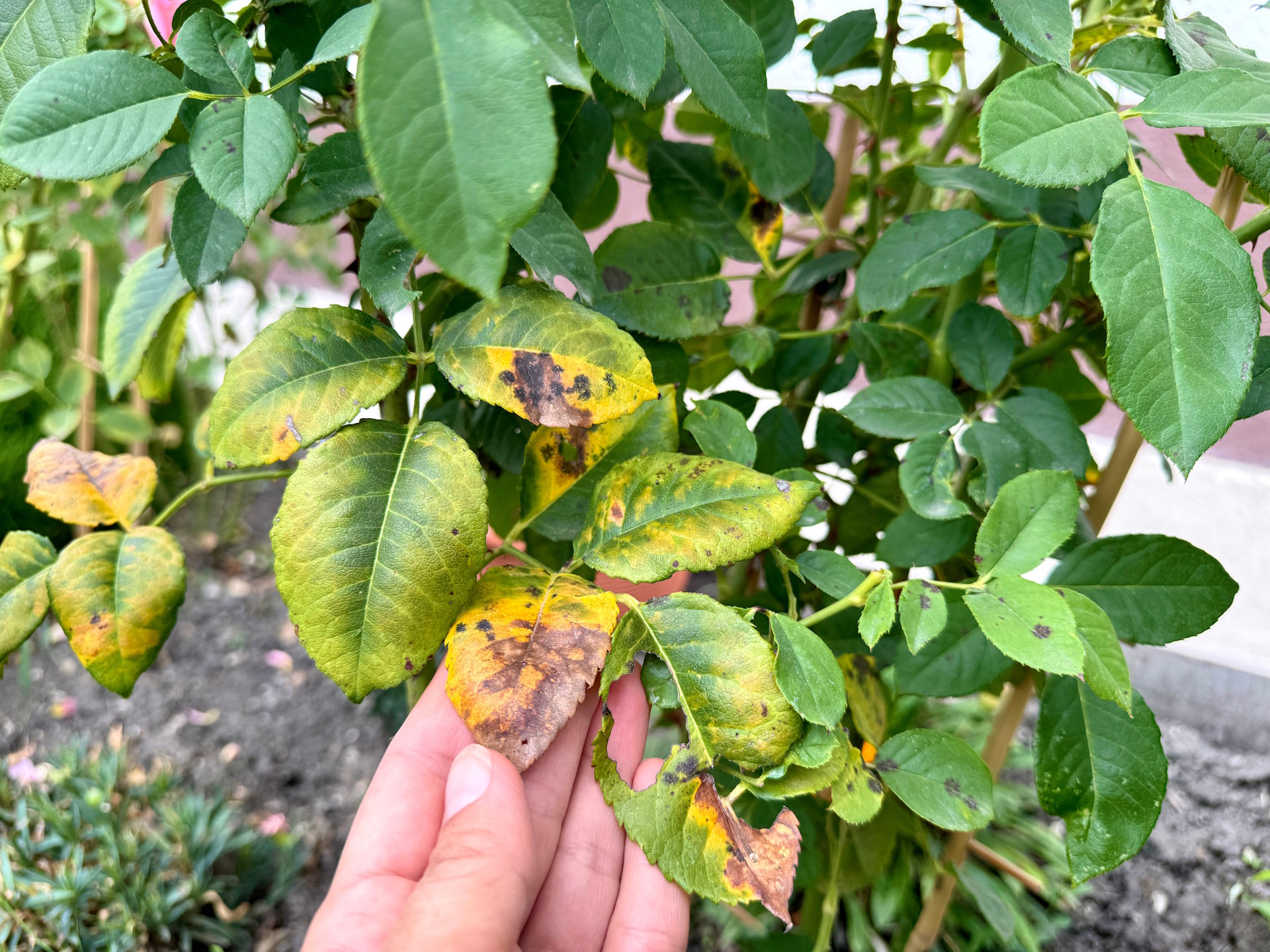
Rose black spot is the single most common rose disease in the UK and is particularly prevalent given Surrey’s typically rainy spring and early summer conditions. It appears as clearly circular black spots on the upper surface of leaves, frequently surrounded by a distinct yellow halo. Affected leaves drop prematurely, and a severe infection can completely defoliate an established rose by midsummer – significantly weakening it heading into the following season.
What to do
- Collect and promptly dispose of all fallen leaves throughout the season – do not allow them to remain on the soil surface
- Avoid overhead watering at all costs – water at the base of the plant to prevent spreading spores via splash
- Apply a systemic rose fungicide early in the growing season and repeat at the intervals indicated on the label
- Prune roses hard in late winter or early spring to remove all infected stems and significantly improve airflow within the plant
- Feed roses consistently – well-nourished plants with strong growth are substantially more disease-resistant than stressed ones
Vine Weevil
What it looks like
The most destructive phase of vine weevil damage is entirely invisible until significant harm has already been done. The grubs feed voraciously on plant roots underground through autumn, winter, and spring, and the first visible sign is often a plant that suddenly wilts and collapses despite apparently adequate watering and care.
Above ground, you may notice characteristic notch-shaped bite marks around the margins of leaves – these are made by the adult weevils feeding at night.
What to do
- Apply nematodes (biological control) to the soil in late summer or early autumn while the soil is still warm and moist – this is the most effective timing
- Inspect pot-grown plants regularly by examining root balls — grubs are a creamy-white C-shape with a distinct tan-coloured head
- Repot all affected container plants immediately, removing every grub found by hand before repotting into fresh compost
- Apply a vine weevil drench treatment to vulnerable containers as a preventative measure, particularly for high-value plants
Why Regular Maintenance Makes All the Difference
Plant health issues are one of the most compelling arguments for regular, consistent professional garden maintenance rather than occasional visits or reactive care.
Our experienced team visits on a scheduled basis and knows precisely what to look for – catching problems at an early, manageable stage before they spread through the garden or become irreversible.
We also have access to professional-grade treatments not available through retail channels, and the expertise to apply them correctly and safely.
If you have noticed any of the above symptoms in your Surrey garden, do not wait and hope it resolves itself.
Early intervention is almost always more effective, less damaging to your garden, and considerably less costly than attempting to address a problem that has been allowed to develop unchecked through an entire growing season.
Book a garden health assessment: 01372 610566